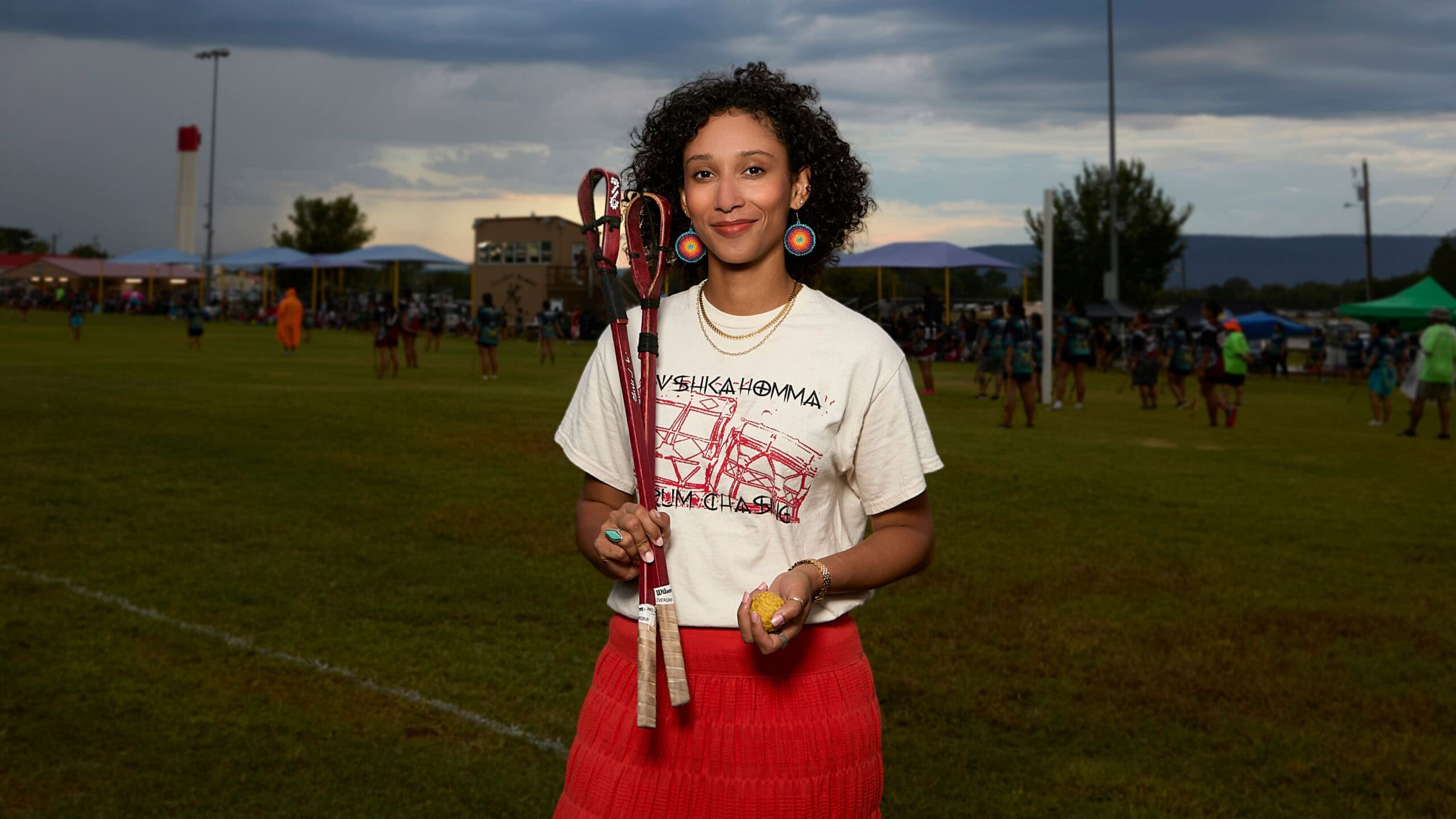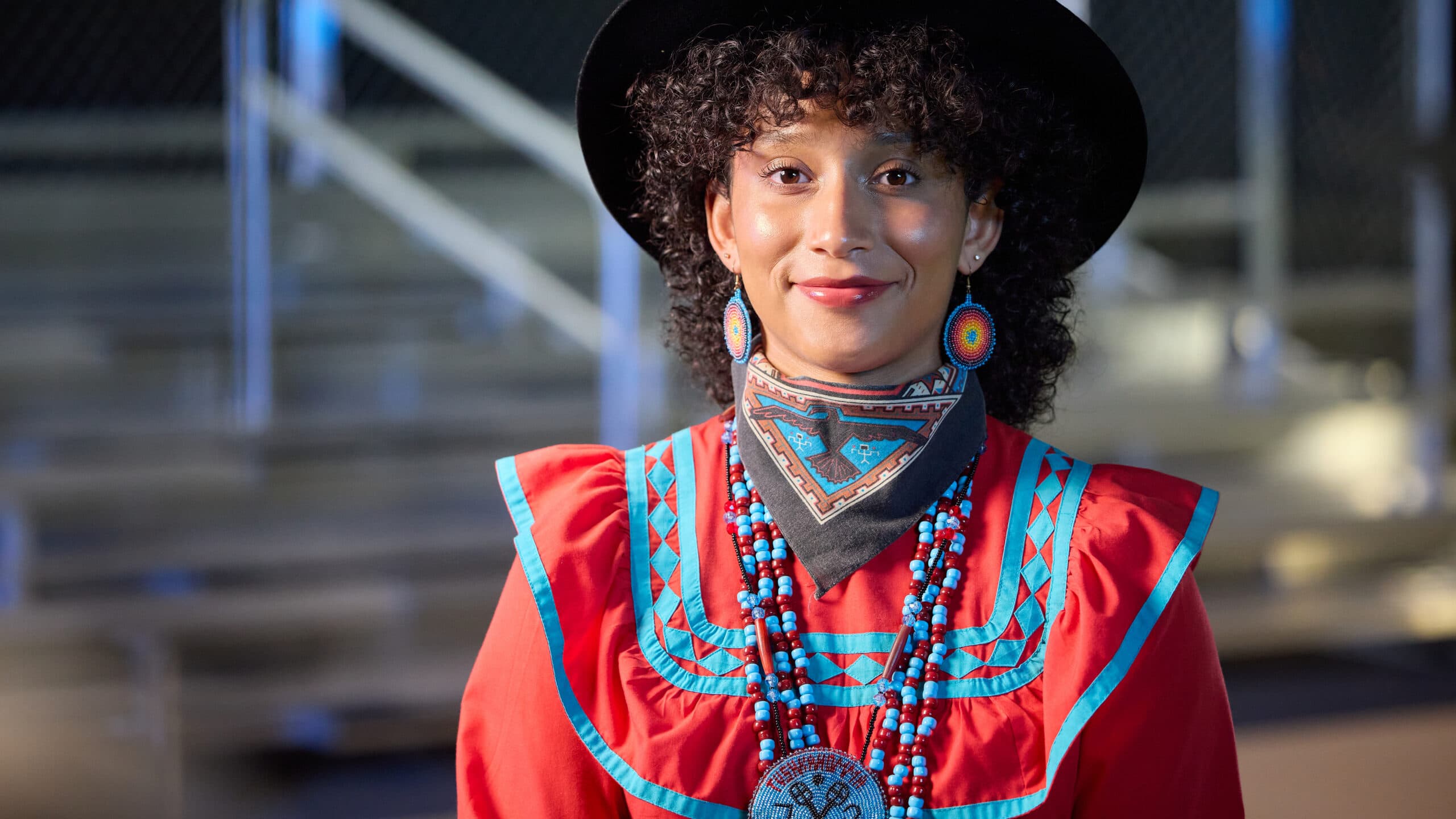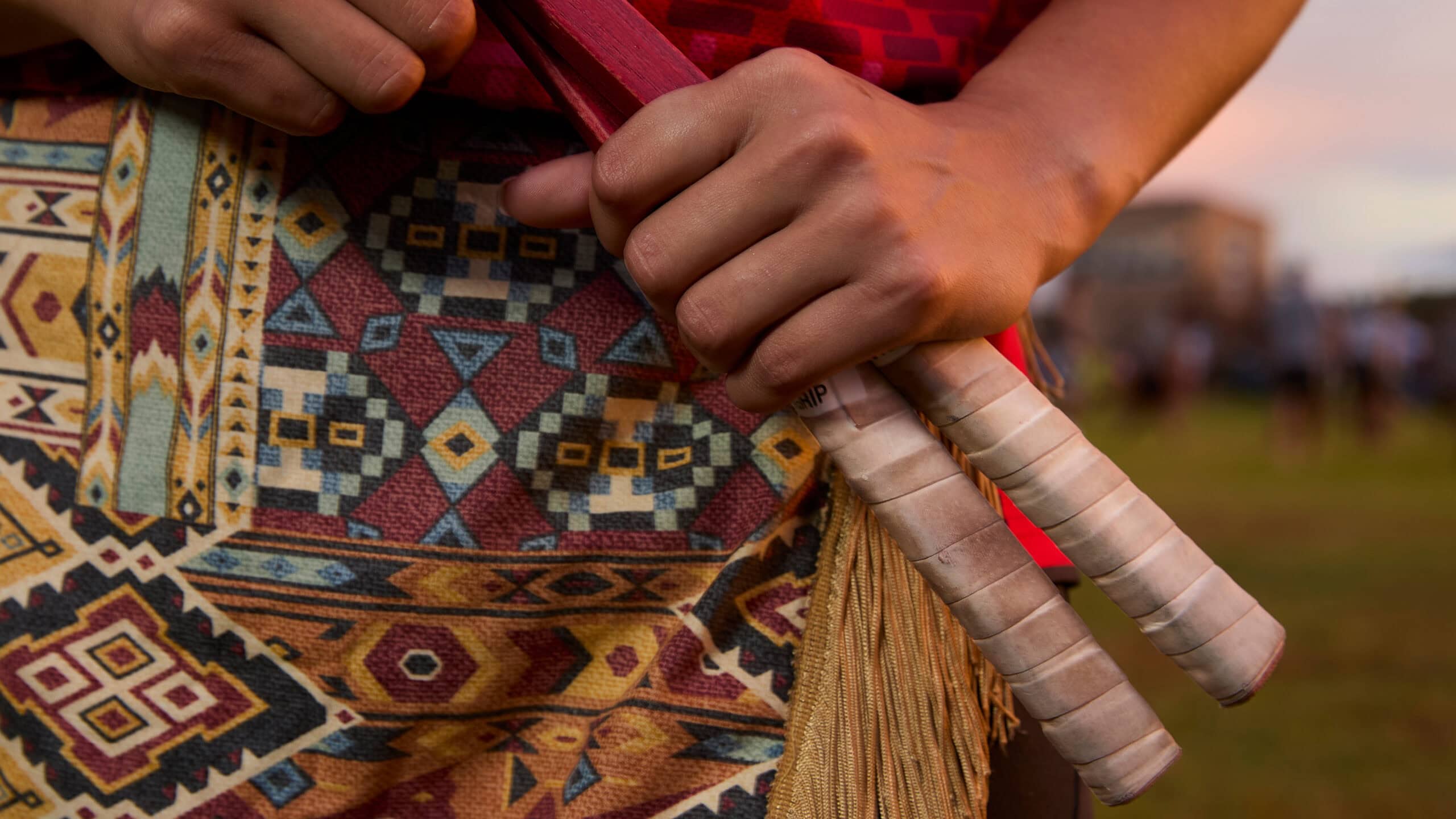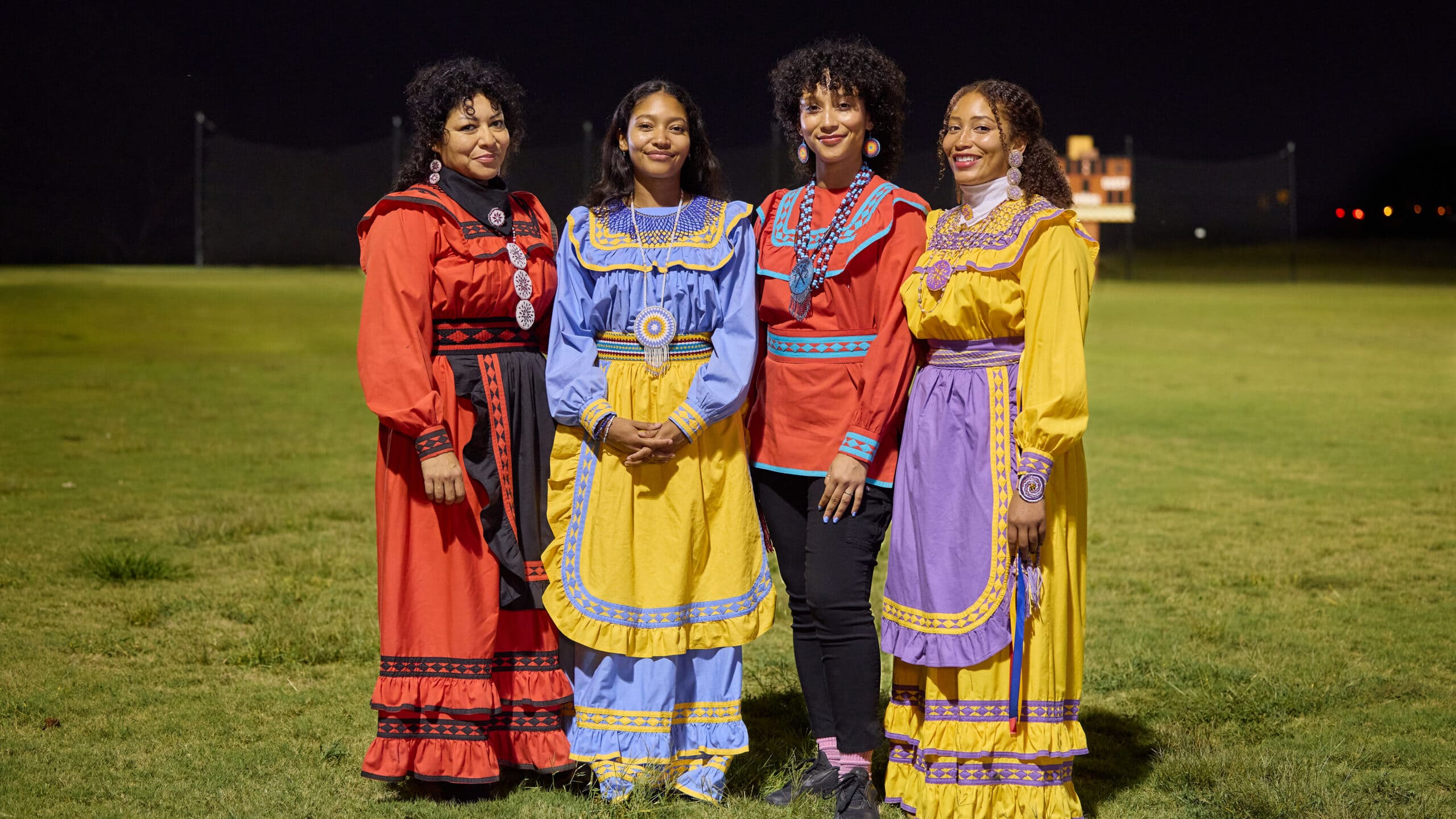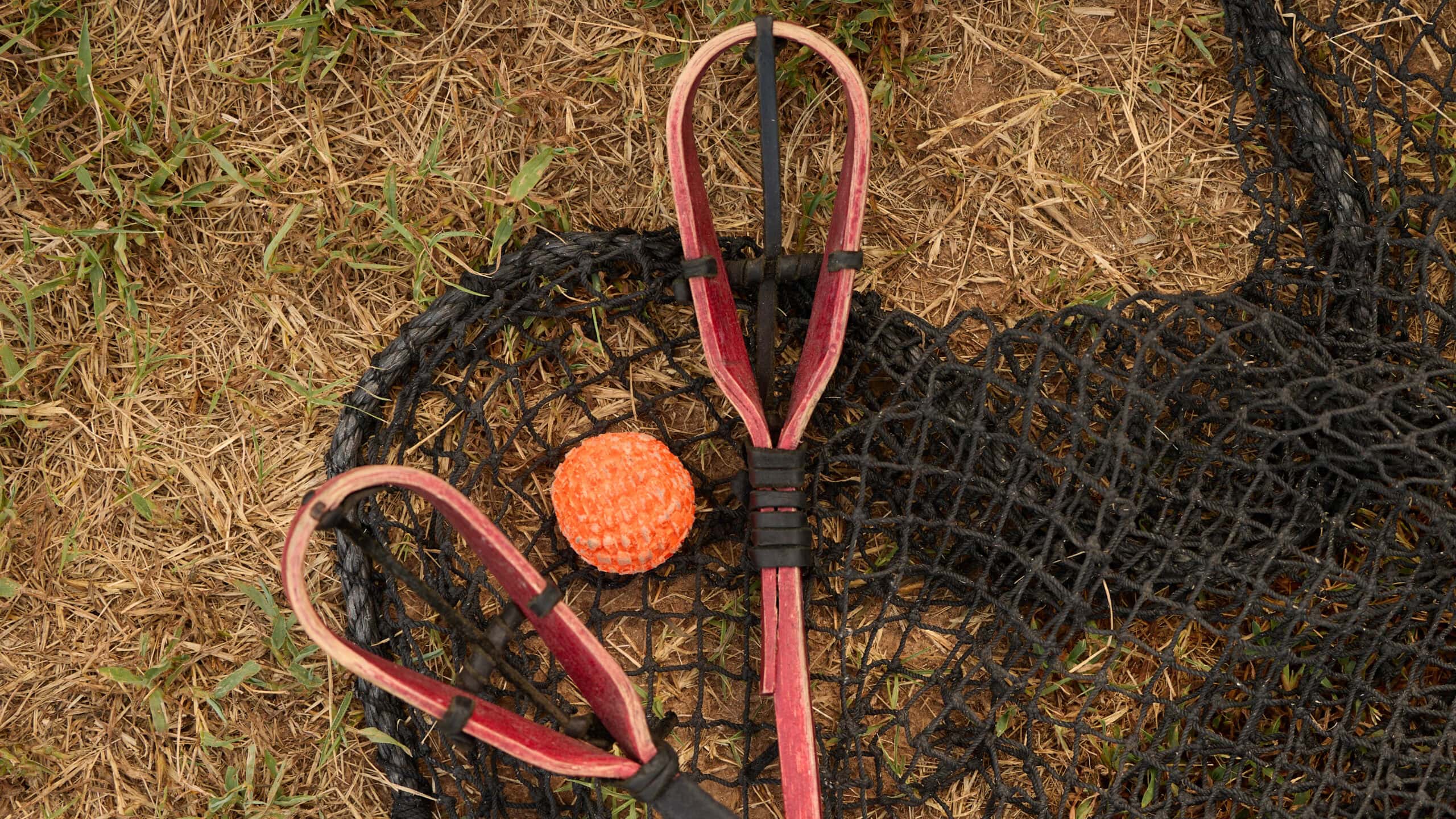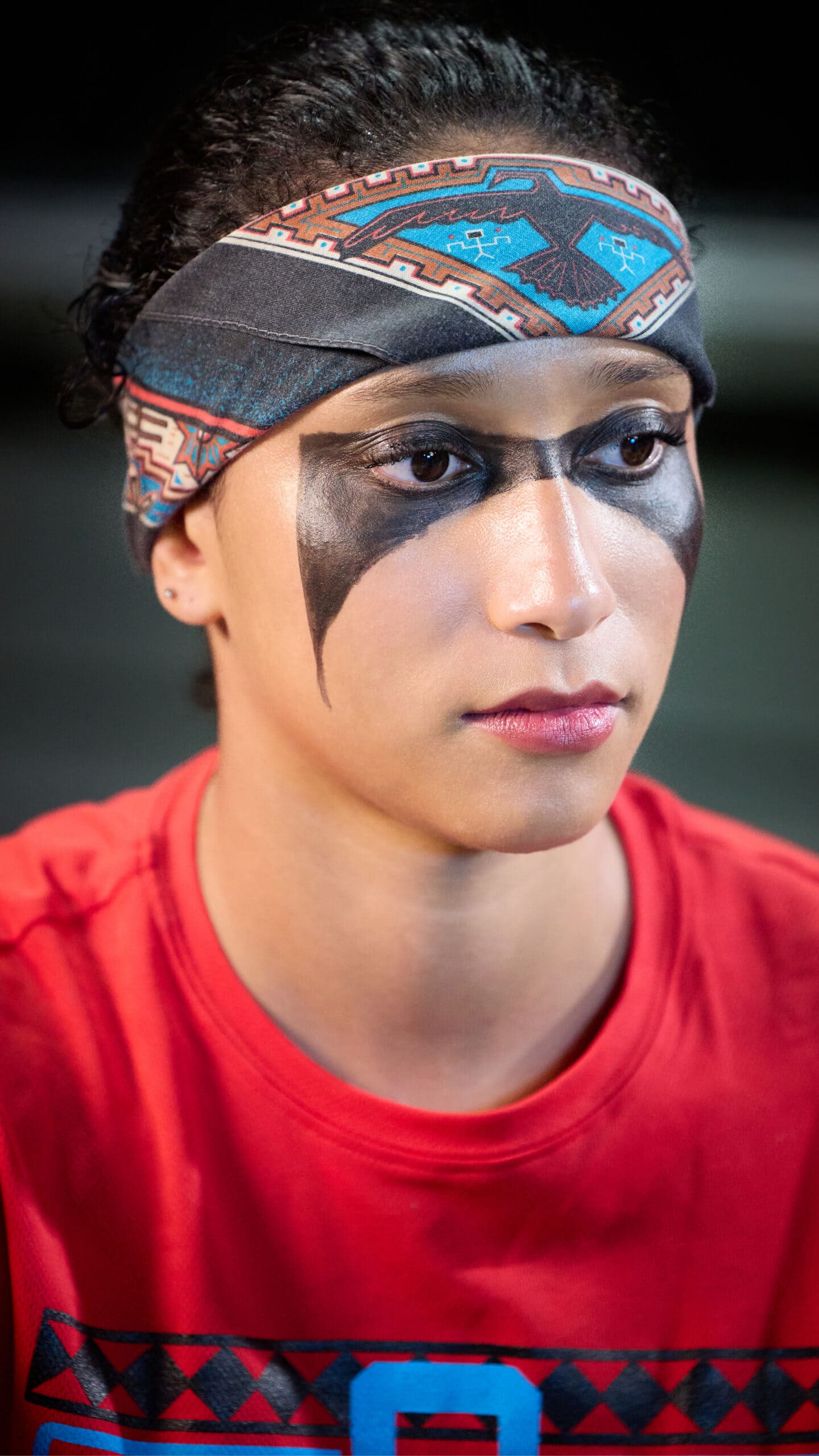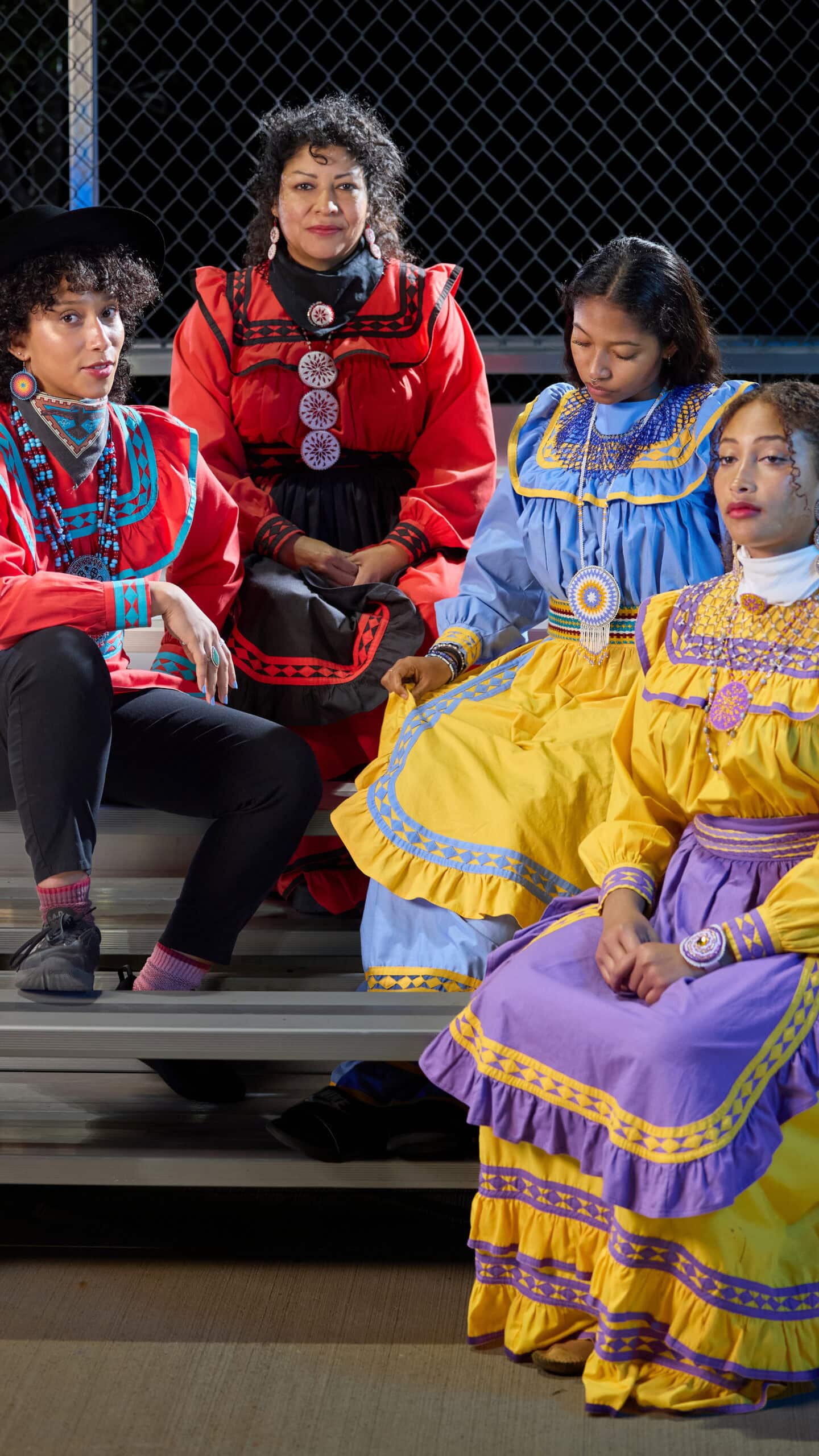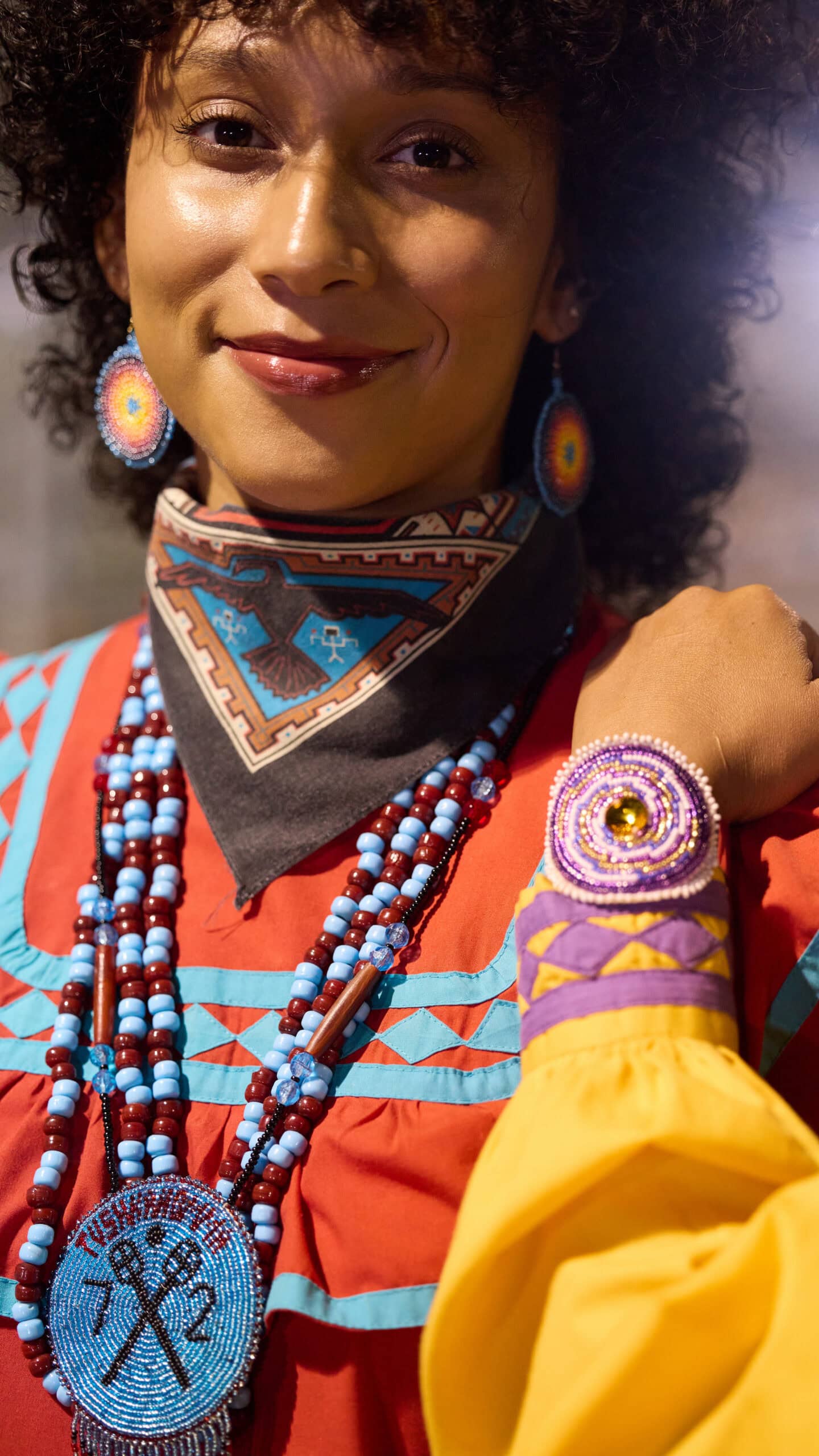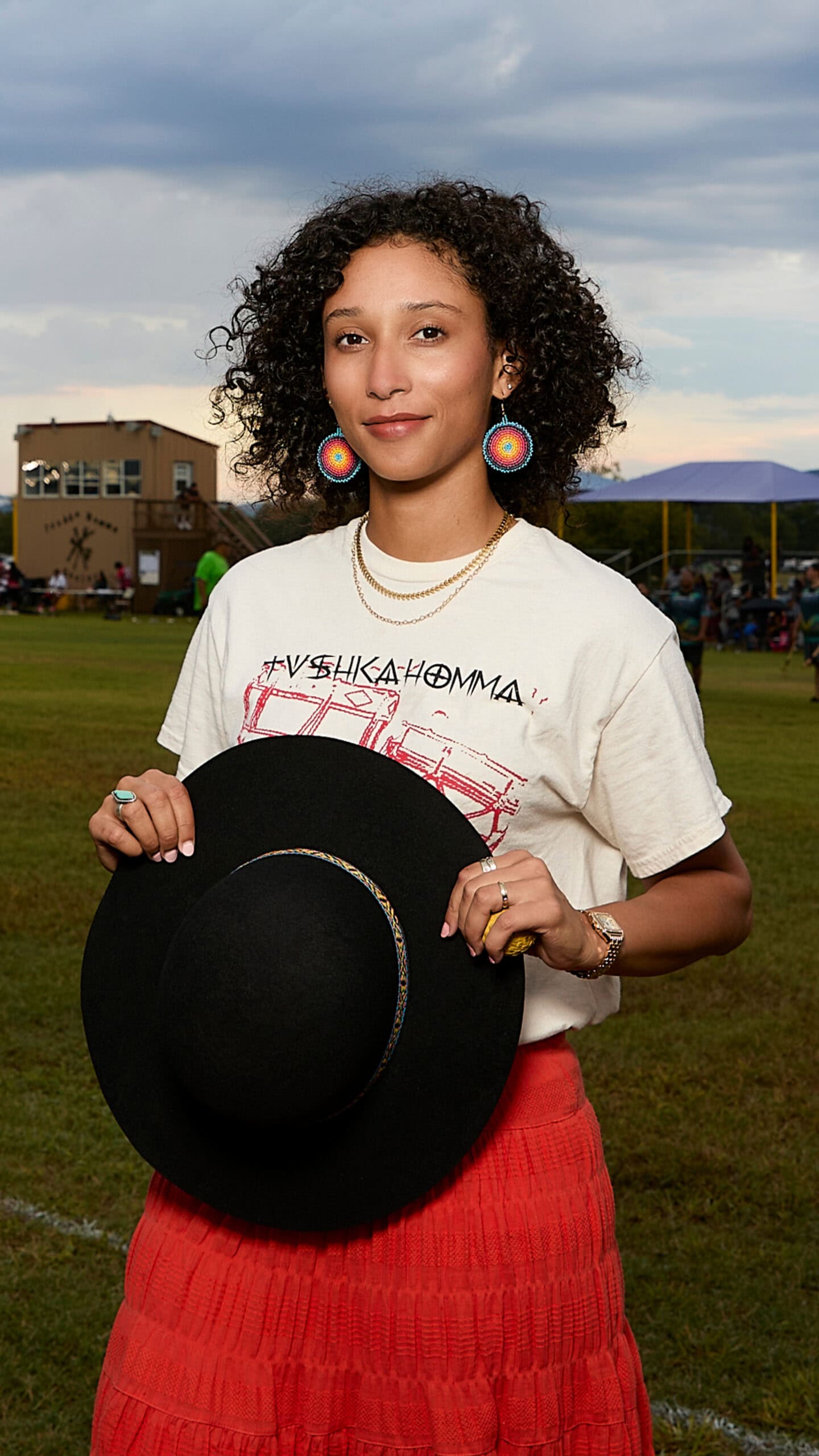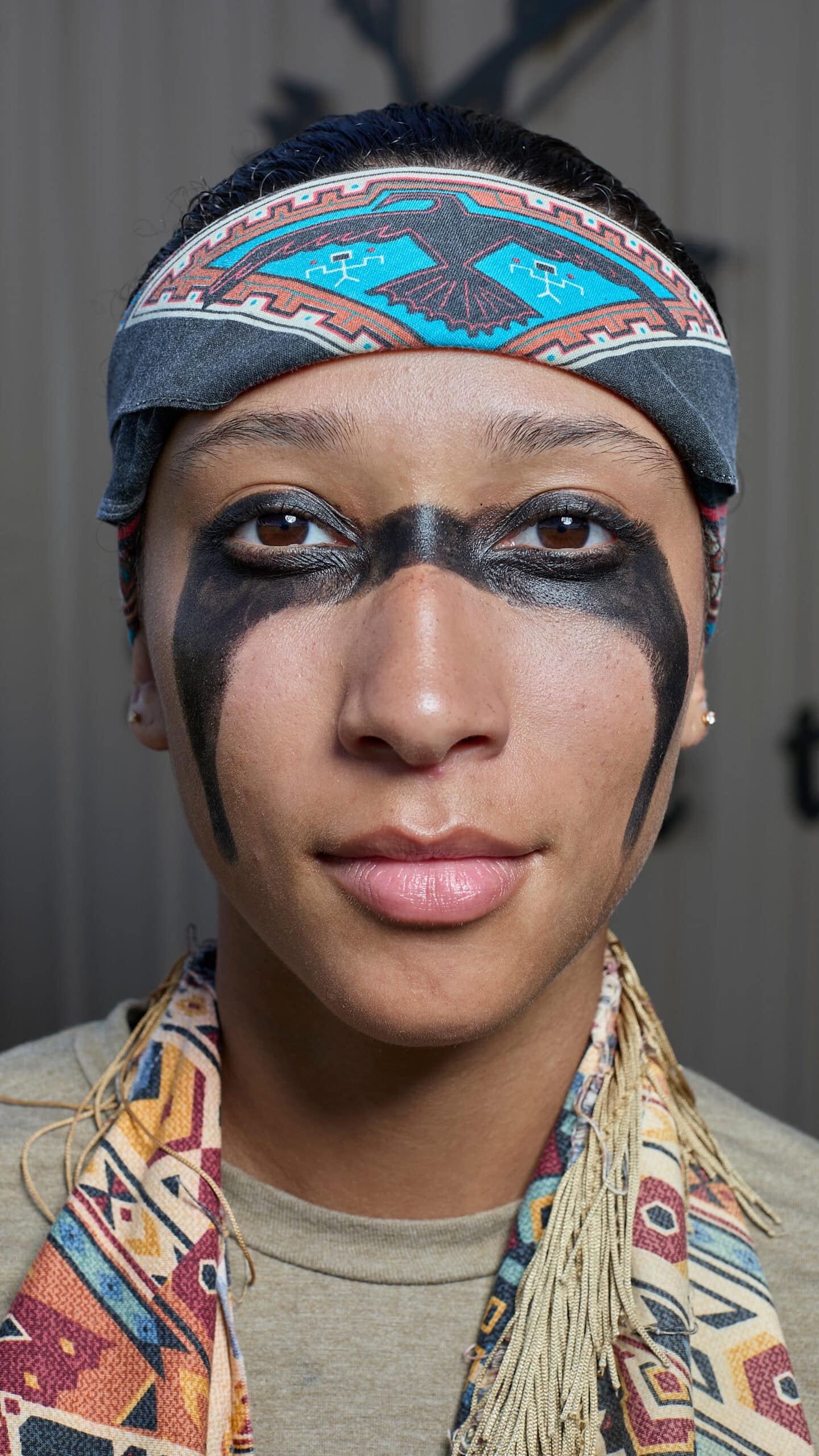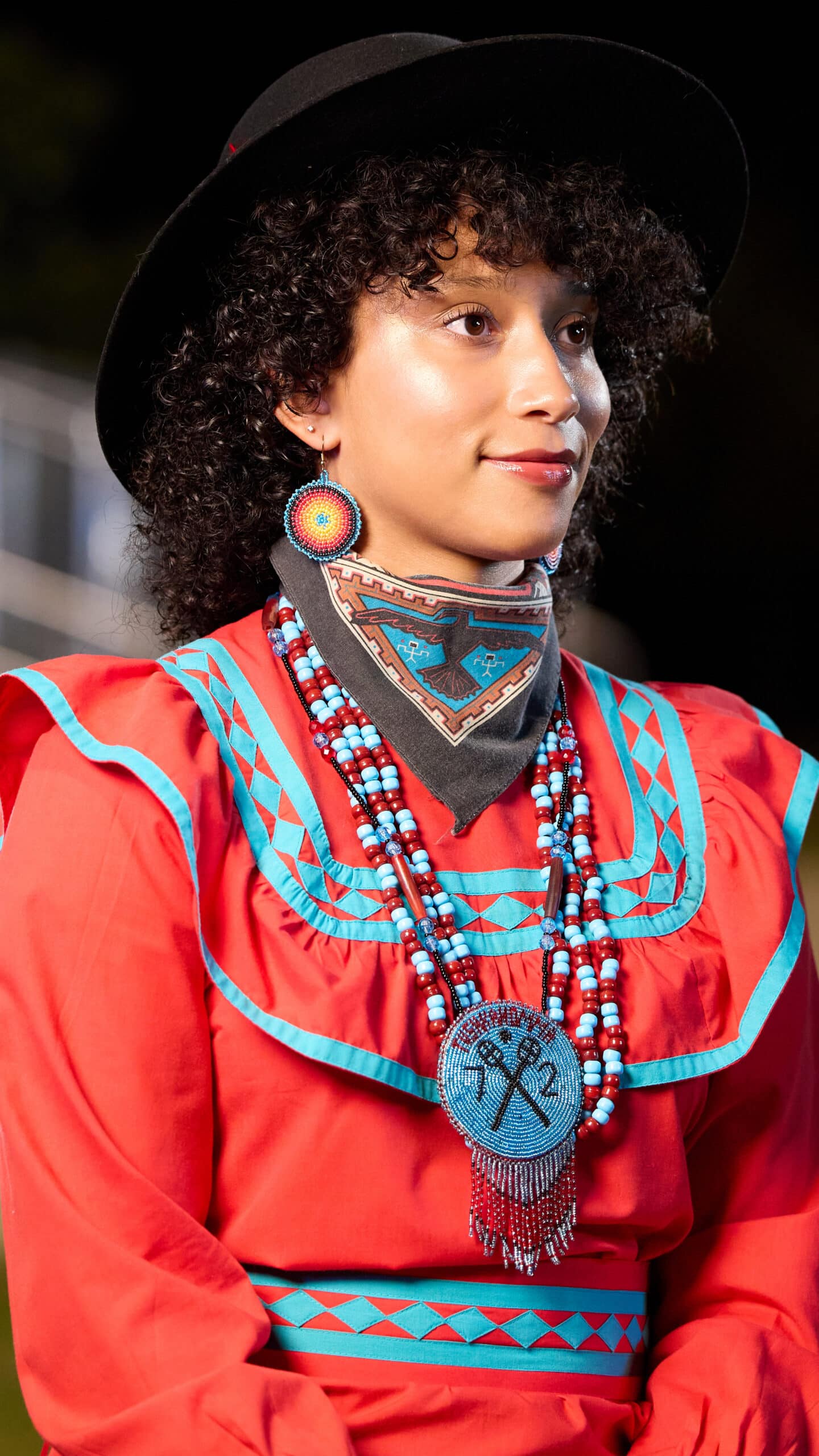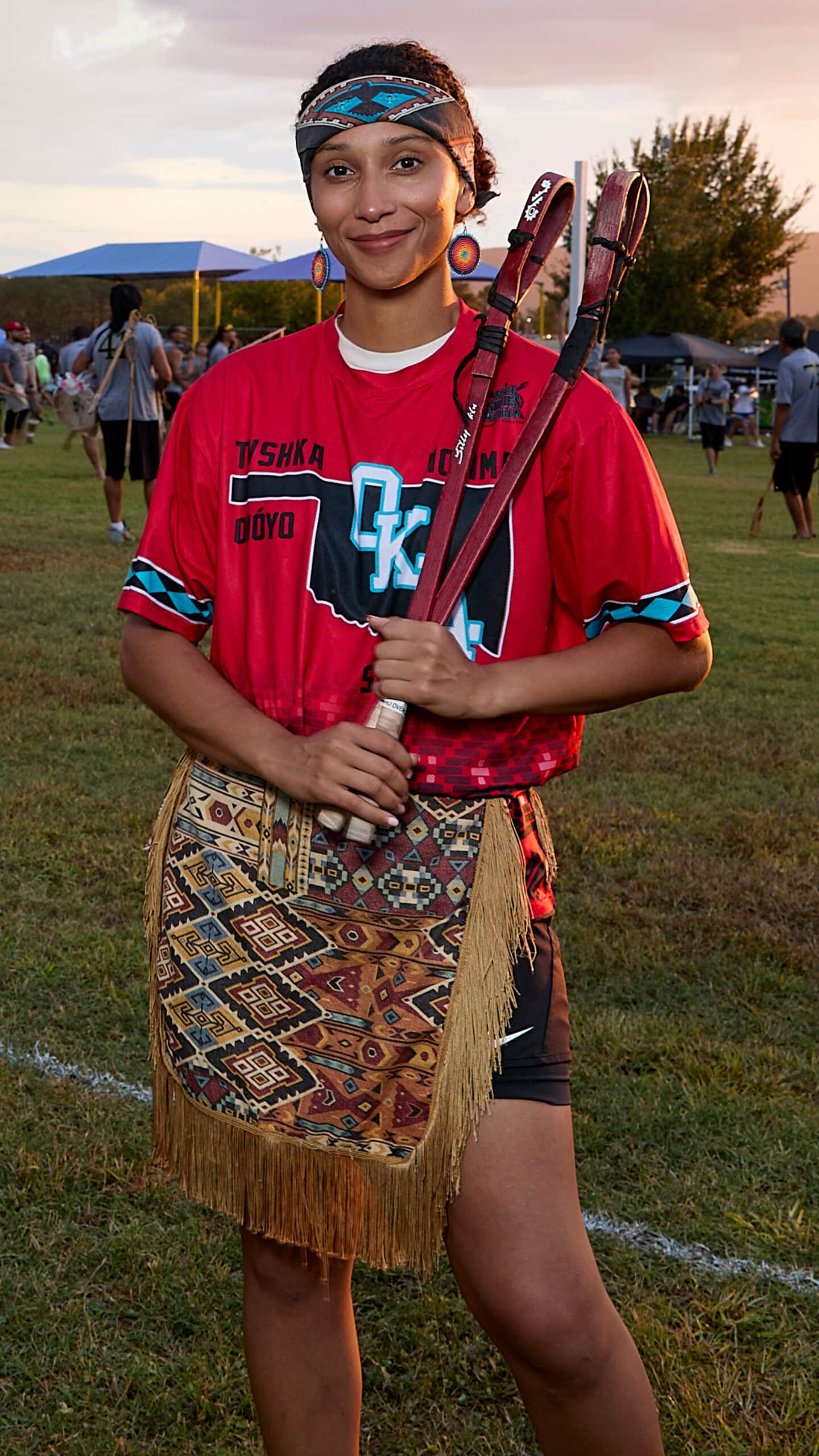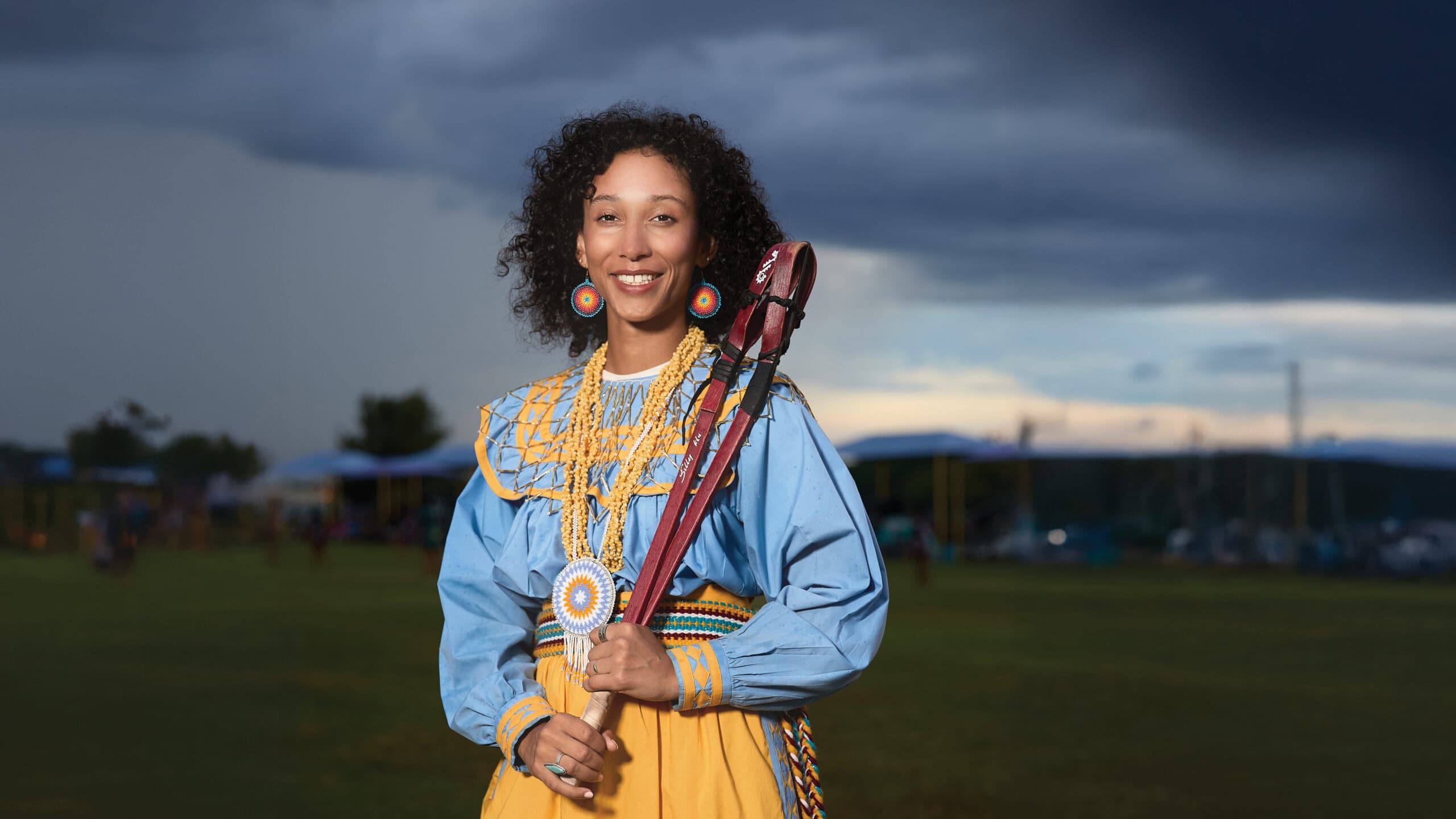
Tribal member and stickball player Yasmine Austin Sapulpa grew up rooted in Choctaw language, community, and tradition, even while living far from the reservation. Growing up in Virginia, she and her sisters learned Choctaw words before English ones, sometimes realizing years later that the terms they knew so well were not the same ones their classmates used at school. Their mother spoke Choctaw at home, and that everyday use of language helped form Yasmine’s identity from a young age. Each summer, the family returned “home,” not simply to a place, but to people. They attended Choctaw singings that lasted late into the night, visited their grandmother, made traditional foods, and sang Choctaw hymns together as siblings. Long before she could articulate it, Yasmine was being shaped by a culture that valued belonging, responsibility, and togetherness.
“I think it’s something that is kind of an extraordinary experience to know who you are, to know your culture, where you come from, and to have a community that you can call home,” said Yasmine. “Home doesn’t just have to be the place that you live or the place that you’re from.”
Looking back as a young adult, Yasmine recognizes how extraordinary it was to grow up with such a clear sense of who she is and where she comes from. For her, home has never been limited to geography. It is community, the people who watched her grow up, who shared stories, language, and laughter. She believes that having an anchor in culture gives people confidence and grounding, something she has seen many others search for throughout their lives.
Yasmine said, “I think it’s really important to have that anchor in a culture. I know a lot of people who kind of search for culture and search for a place to belong. So, it’s really meaningful to me that I do have that. And I feel that people are more grounded and are more confident whenever they do have a culture that they belong to or a culture that they can lean on.”
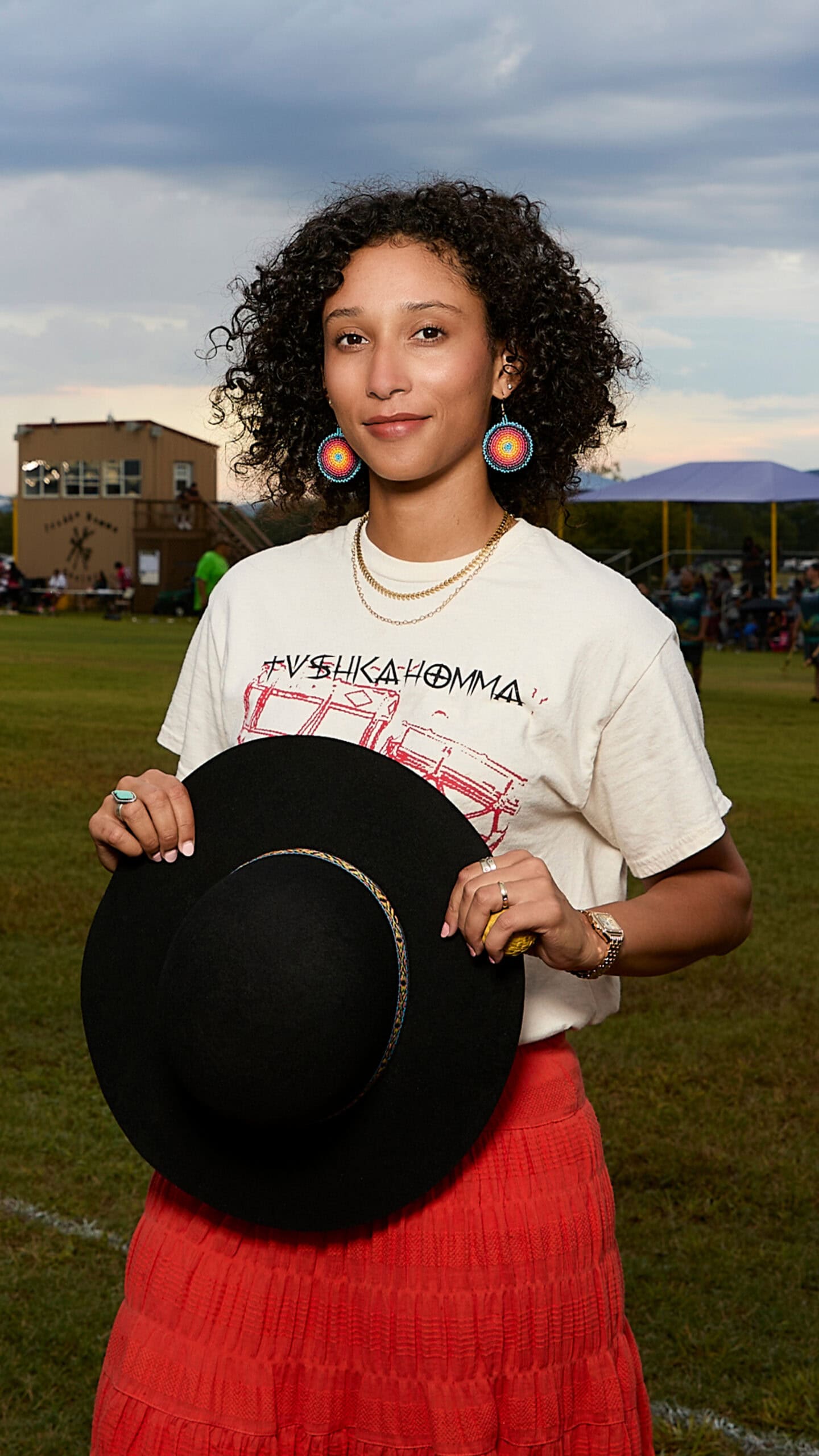
“I think it’s something that is kind of an extraordinary experience to know who you are, to know your culture, where you come from, and to have a community that you can call home,” said Yasmine. “Home doesn’t just have to be the place that you live or the place that you’re from.”
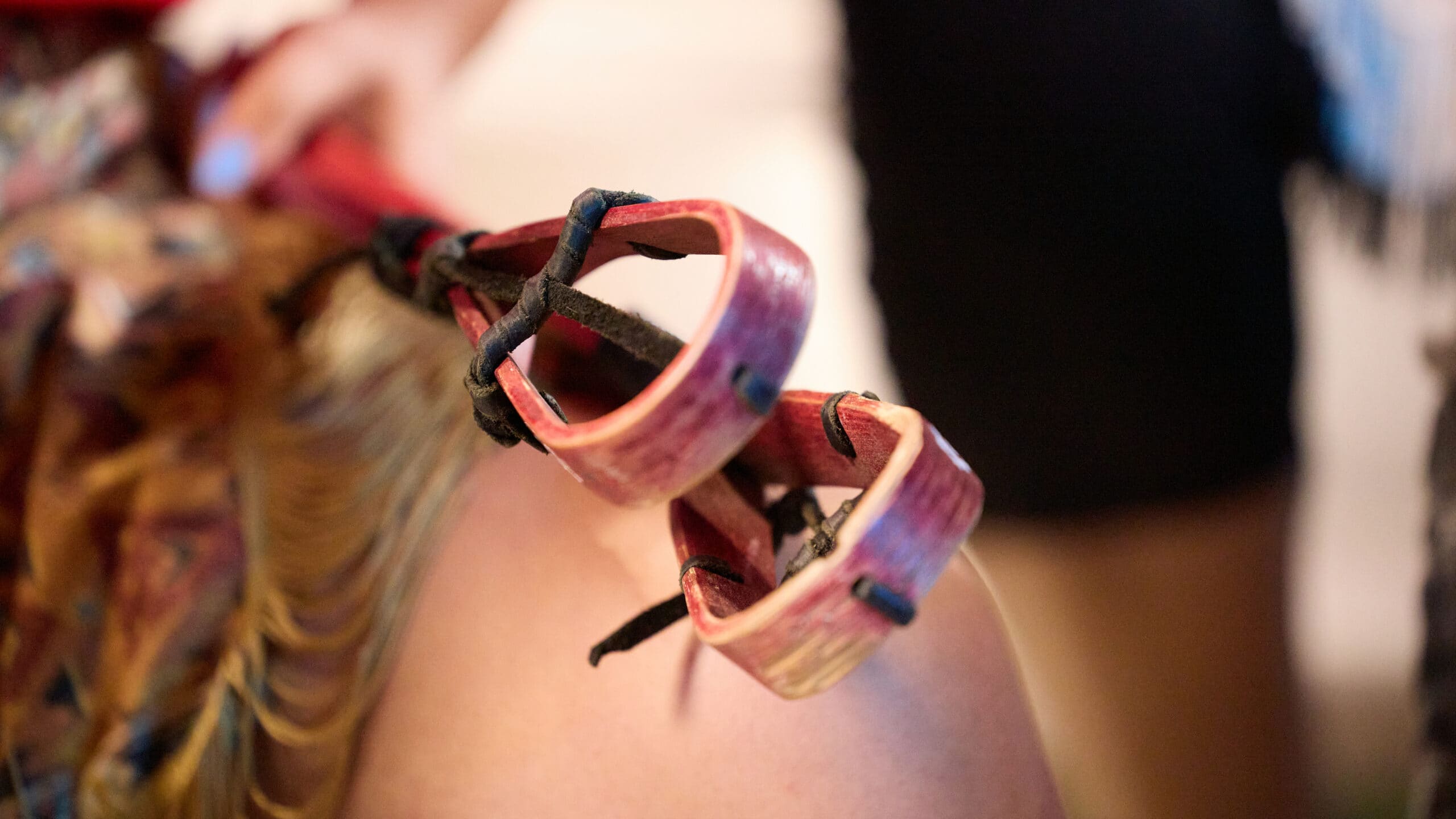
That foundation became especially important when Yasmine discovered stickball. At fourteen, she and her three younger sisters joined the newly formed Choctaw Nation youth league. Like many early players, they were learning as they went, fumbling with sticks and guided by coaches who were also finding their footing. What began as curiosity soon became a passion and commitment. Over time, stickball grew into something far greater than a sport: it became a place of belonging, leadership, and cultural connection.
As Yasmine progressed into adult play, she faced fear and uncertainty, especially when joining experienced teams filled with players she did not know. Encouraged by the kindness and support of seasoned players, she stayed on, learning not just the game, but also how generosity and mentorship sustain a community. Those early experiences now shape how she shows up for others.
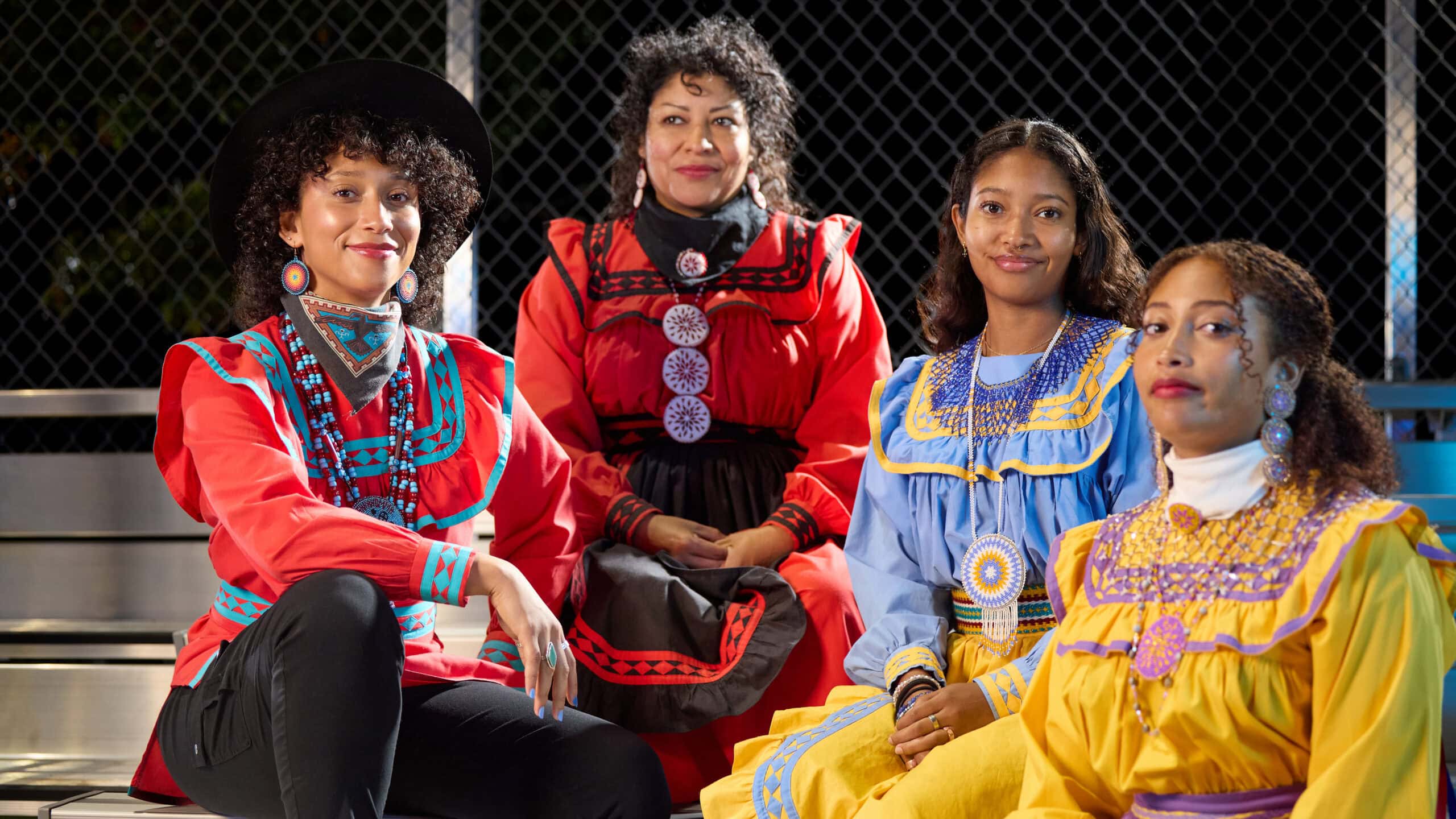
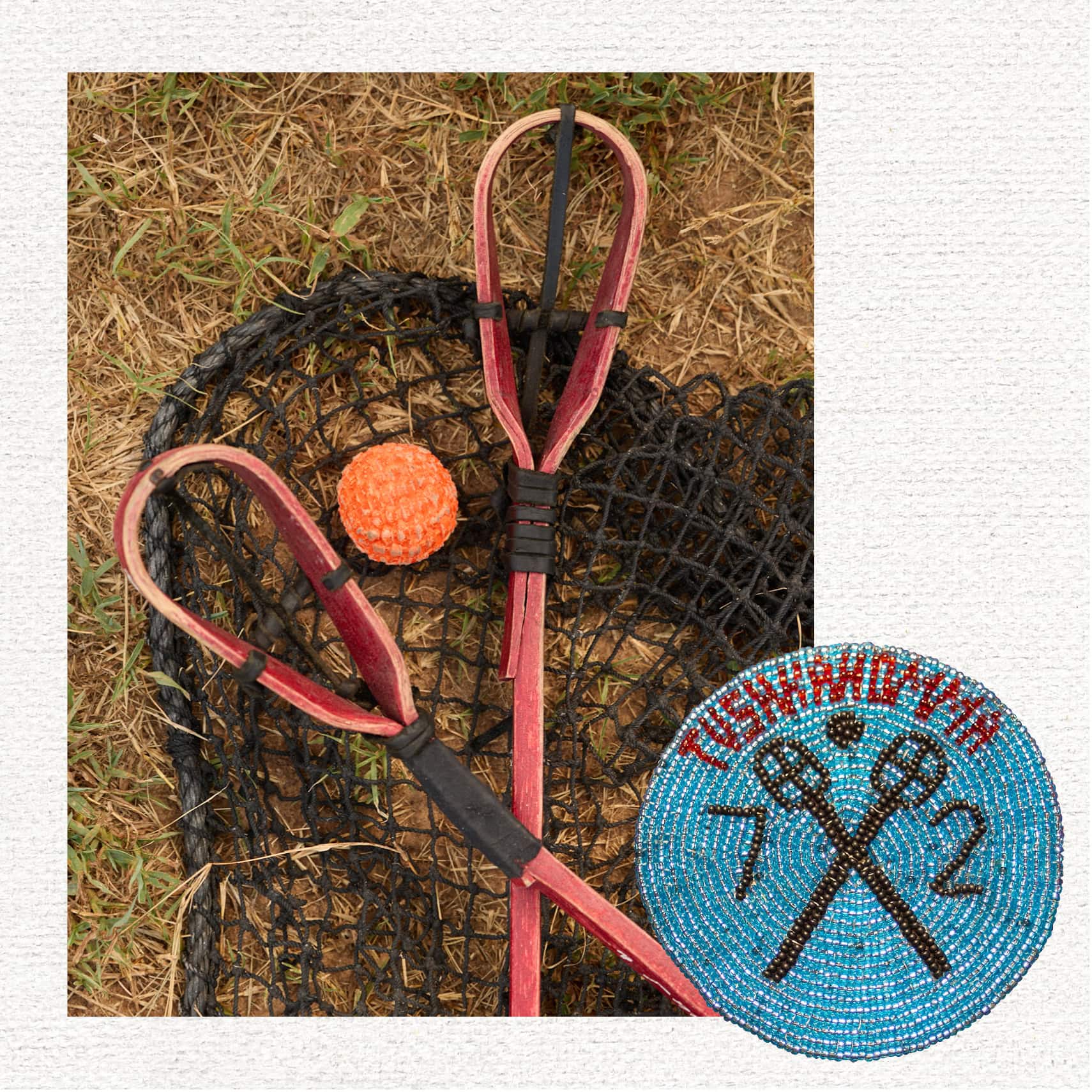
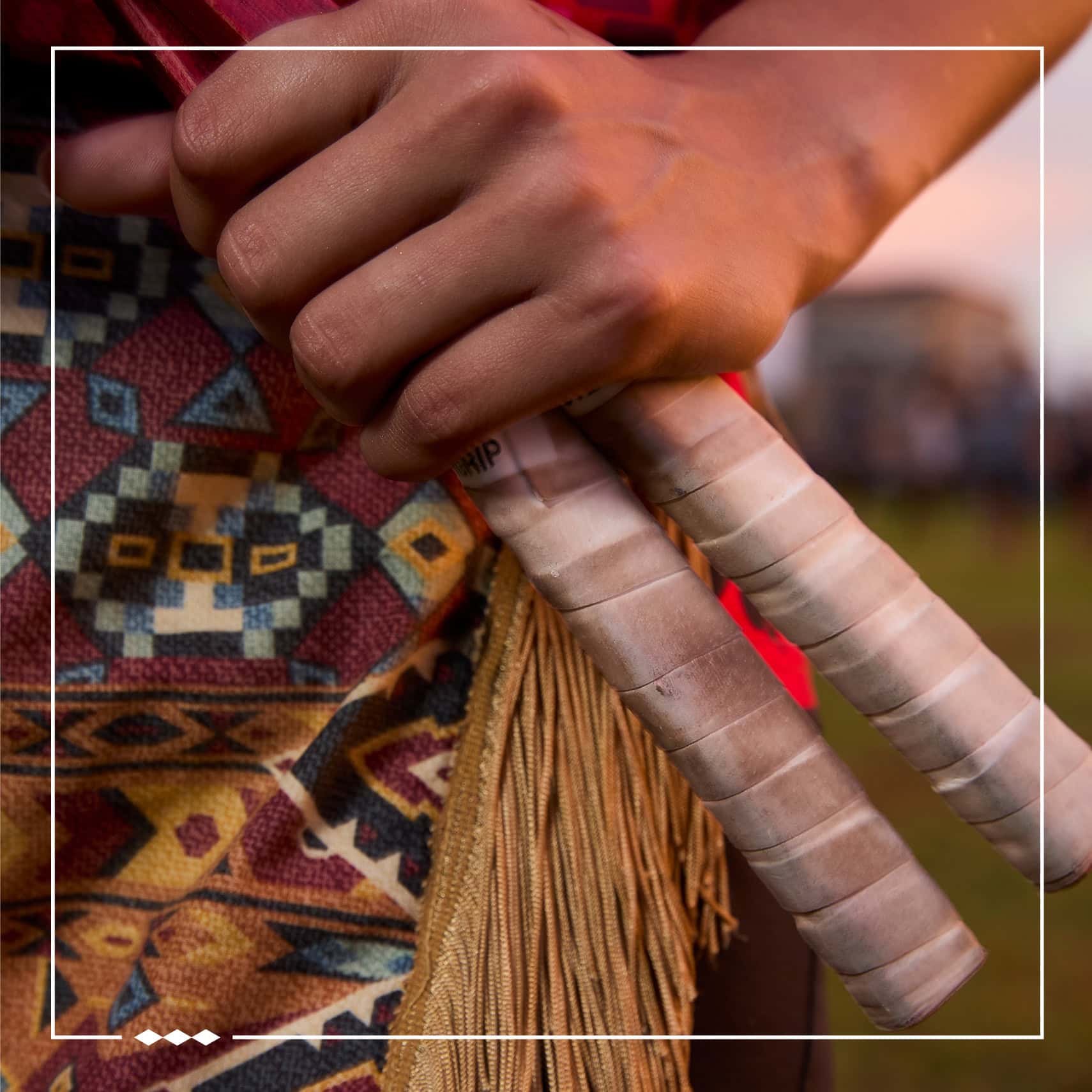
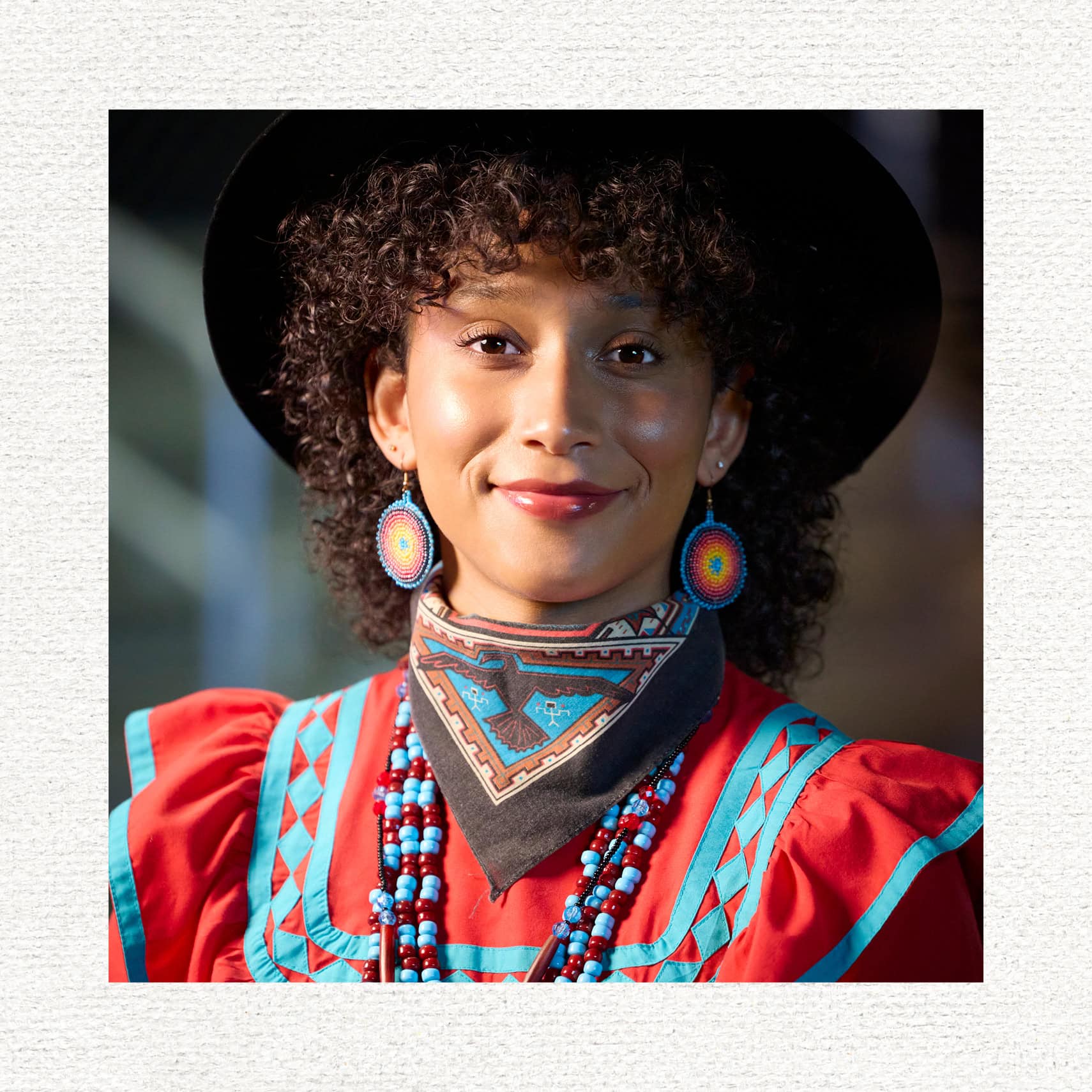
“Those people are really important, and those are the people I think about,” said Yasmine. “Whenever I do see new players, or we have the youth that come to our youth league stickball practices, I can be that person for someone else—be the person that makes somebody want to stay, make someone want to get better and to learn more.”
Today, Yasmine plays center, a crucial position that is fast-paced and demanding. The role requires endurance, awareness, and trust. For Yasmine, it mirrors her leadership style: attentive, protective, and decisive.
Beyond playing, she is deeply committed to teaching. Alongside her sister, she coaches youth teams, including Nashoba Homma, helping guide the next generation of players with patience and intention. One of her proudest moments came when youth players began tackling for the first time, fearless and confident in ways she had struggled to be at that age. Watching them grow into strong, dynamic players affirmed her belief in the power of encouragement and preparation.
As an adult, Yasmine takes profound pride in representing Choctaw traditions that have always recognized the strength of women. She speaks openly about the significance of playing a game that Choctaw women have participated in for generations, without having to justify their presence. On the field, she is fiercely protective of her “stickball sisters” and sees that bond as an extension of family.
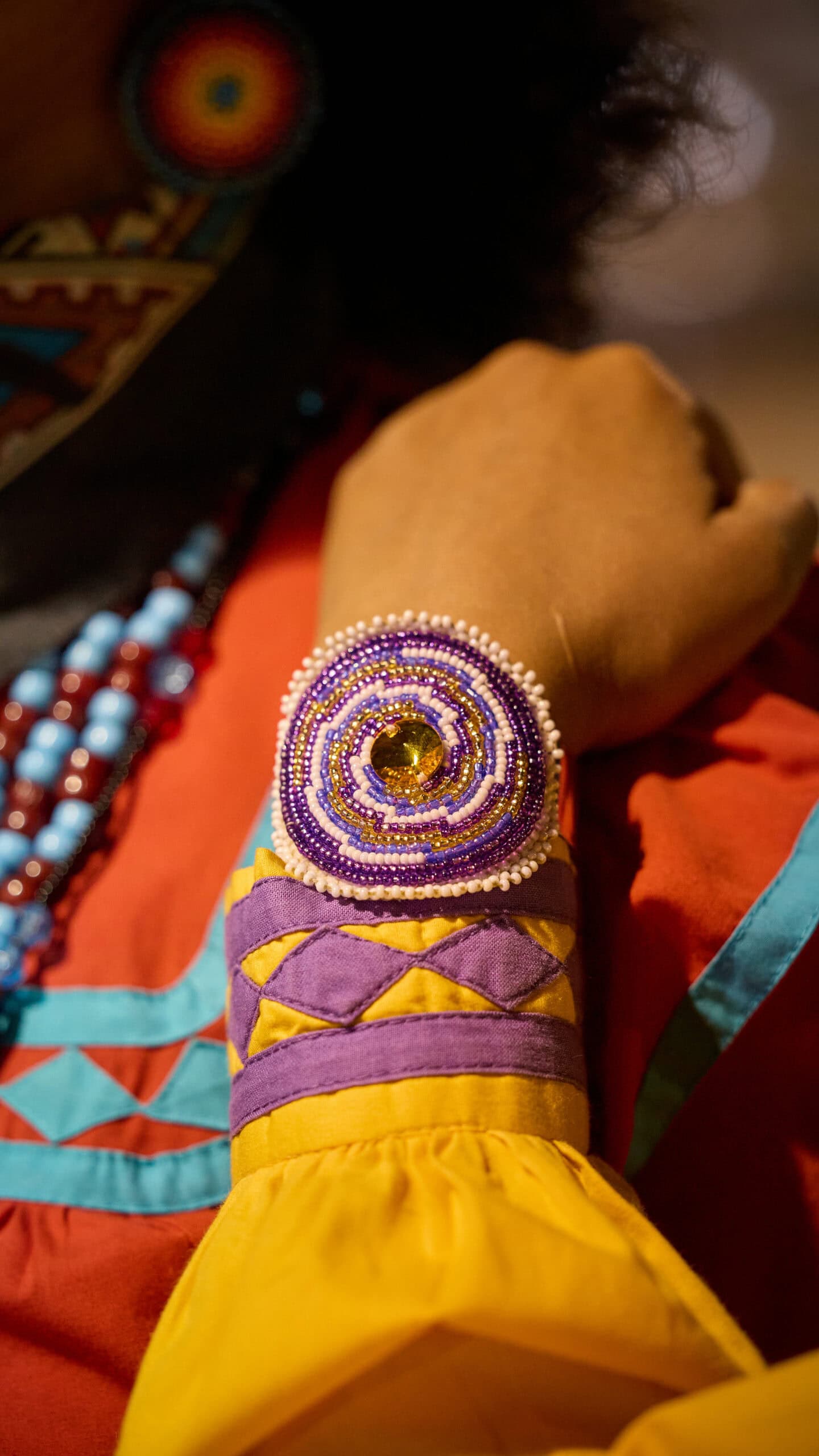
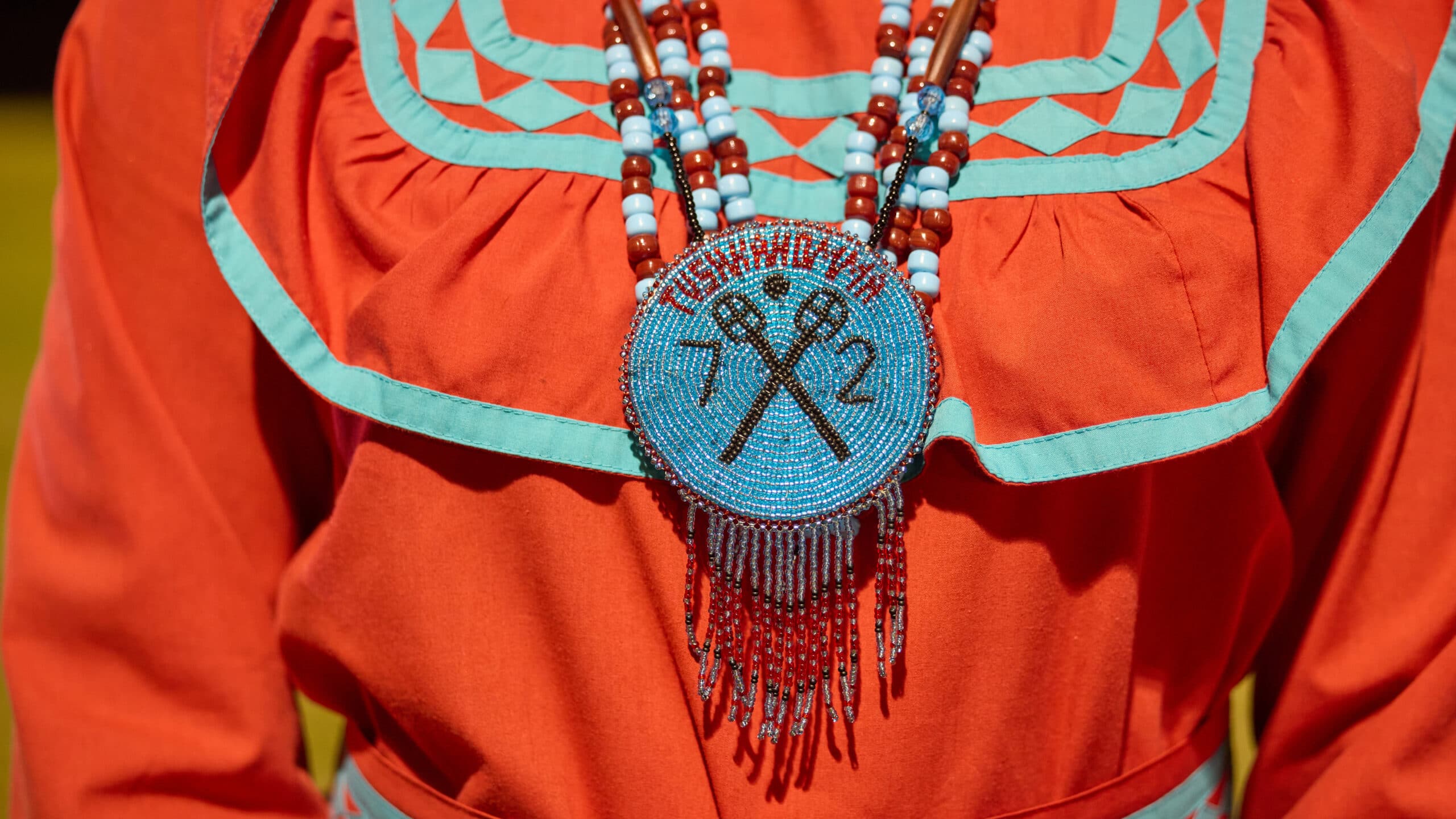
Yasmine also carries her culture into creative expression, blending traditional Choctaw elements into modern textiles and fashion. She believes culture must live, evolve, and invite participation. Preservation matters, but so does adaptation, allowing people to connect, ask questions, and feel welcomed rather than excluded.
Whether on the field, in the community, or through cultural expression, Yasmine understands that cooperative effort, shared responsibility, and mutual care are what allow individuals and nations to thrive.