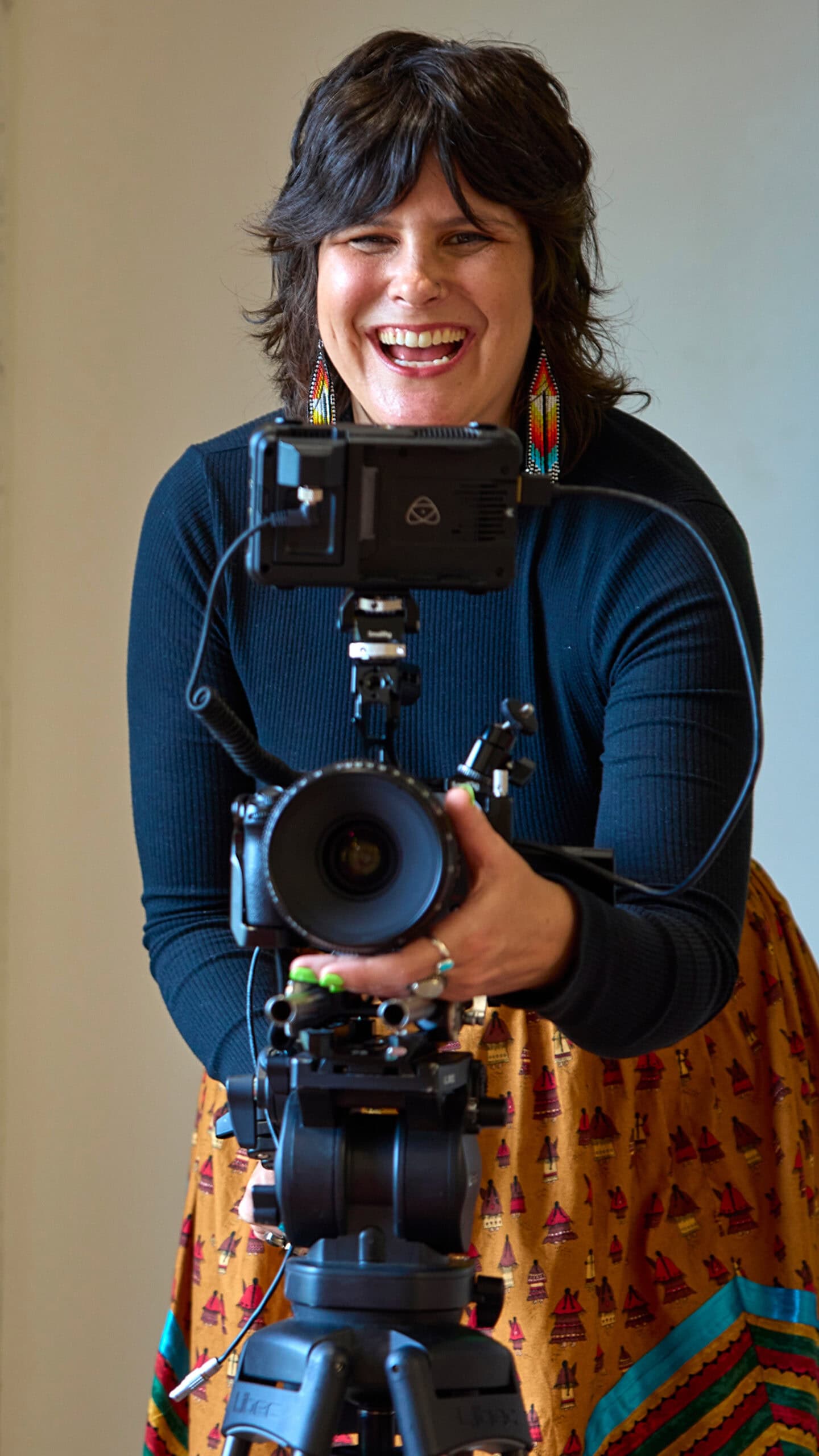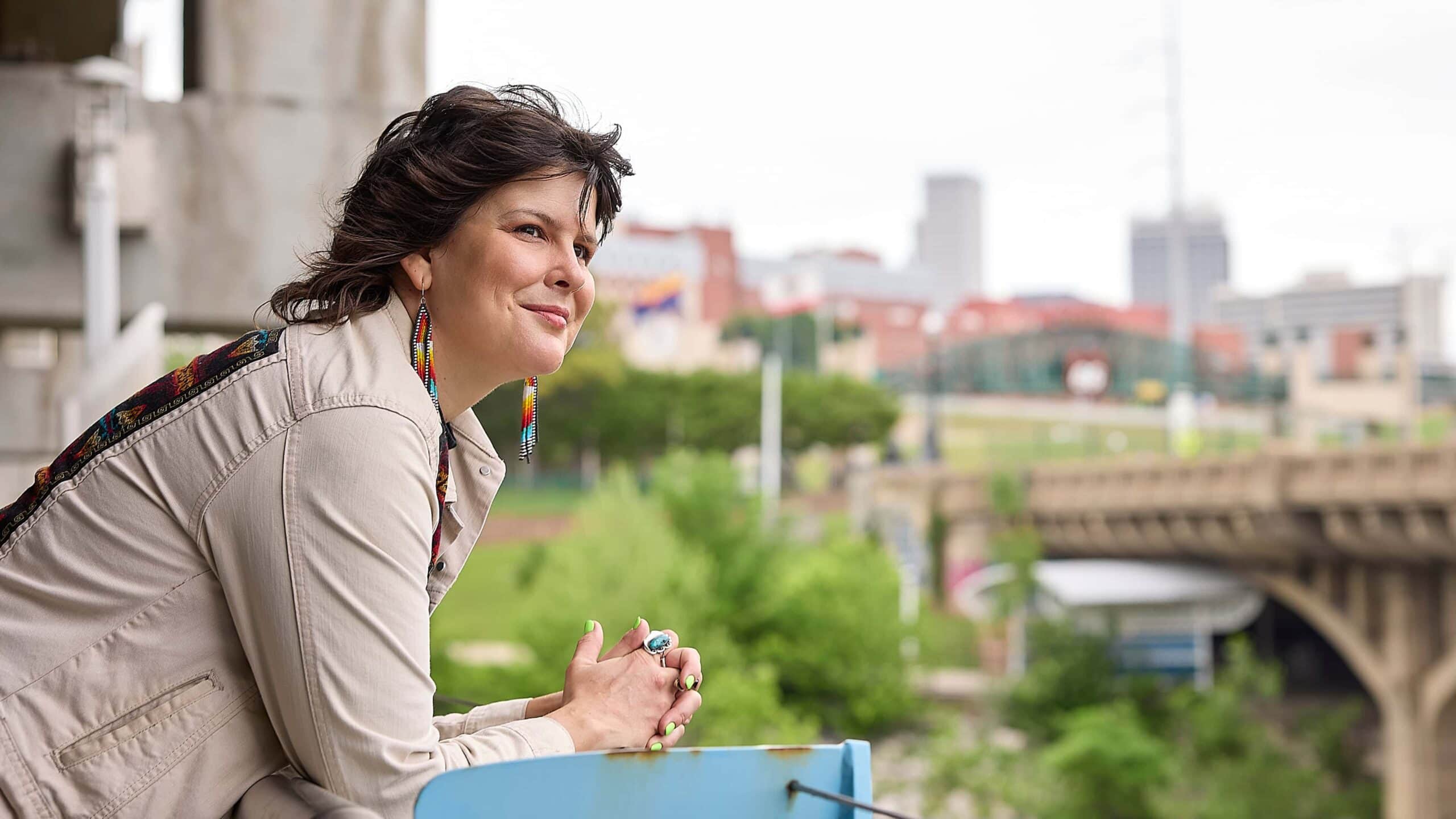
Colleen Thurston is a filmmaker and proud member of the Choctaw Nation whose work connects tradition and modern innovation. With a deep respect for the power of stories, whether spoken around a family table or shared through film, Thurston has dedicated her career to elevating Native voices and perspectives while exploring the relationship between people, land, and water.
From an early age, Thurston was drawn to stories. Family narratives, cultural history, and everyday accounts fascinated her and nurtured her sense of identity. This love of storytelling evolved during college when she took an introductory media class. There, she encountered Chris Eyre’s Smoke Signals, a groundbreaking film that introduced contemporary Native characters to the screen.
“I had never seen Native people on screen in a contemporary role,” said Colleen. “I’d certainly never seen Native people on screen laughing, joking around.”
For Thurston, it was a transformative moment. She realized not only that Native people could tell their own stories through film, but also that she herself could become a filmmaker.
Nature has remained another profound source of inspiration in her creative life. Spending time with trees, rivers, and open skies provides clarity and sparks new ideas.
“I find a lot of inspiration for my work in the land. I feel like in those peaceful moments, ideas come to me, or I feel at my most calm, my mind is most open to receiving inspiration,” she said.
Family influence also shaped her path; when her grandfather’s eight-millimeter films were passed down to her, she understood that she came from a lineage of visual storytellers, adding weight and purpose to her own artistic journey.
Representation has also been central to Thurston’s philosophy as a filmmaker. Growing up, she noticed that women on screen were often confined to limited roles such as mothers or love interests. Her childhood heroes came instead from characters like Marty McFly and Luke Skywalker, who embodied adventure and agency. Seeing Native people portrayed as full, complex individuals laughing, living, and thriving on screen was rare in her youth, but that scarcity fueled her commitment to creating films that expand what is possible.
“I think representation is incredibly important,” Colleen said. “It’s important for anyone to be able to see themselves in other characters.”
Thurston began her career in traditional documentary production, honing her skills at institutions like the Smithsonian in Washington, D.C., where she worked on film programming and later produced digital content for the Smithsonian Channel. Despite early success, she felt called to return home to Oklahoma, where she discovered a thriving Native film community led by creators such as Sterlin Harjo. Immersed in this environment, she began working with Native crews and telling stories rooted in her own homeland.
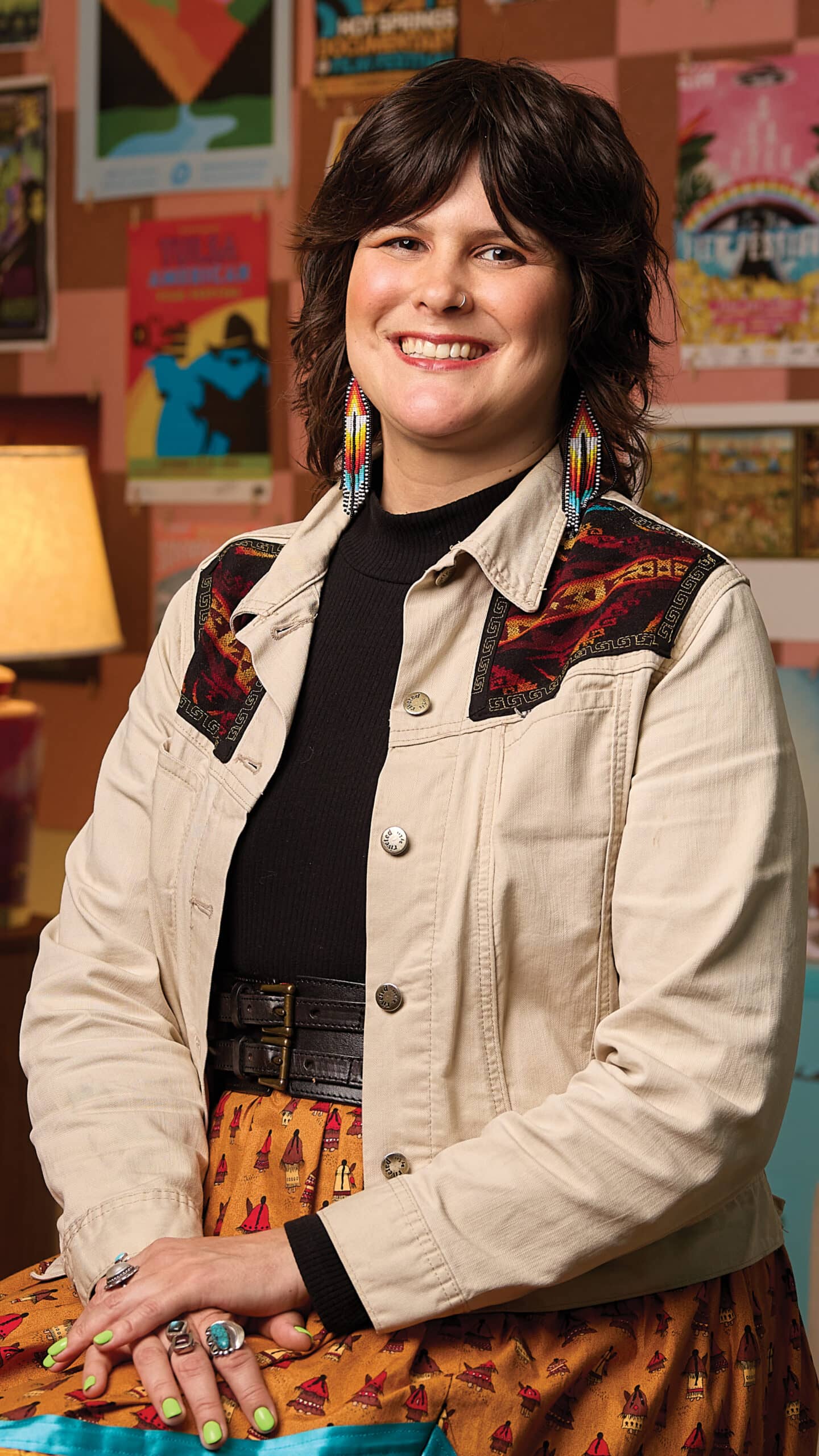
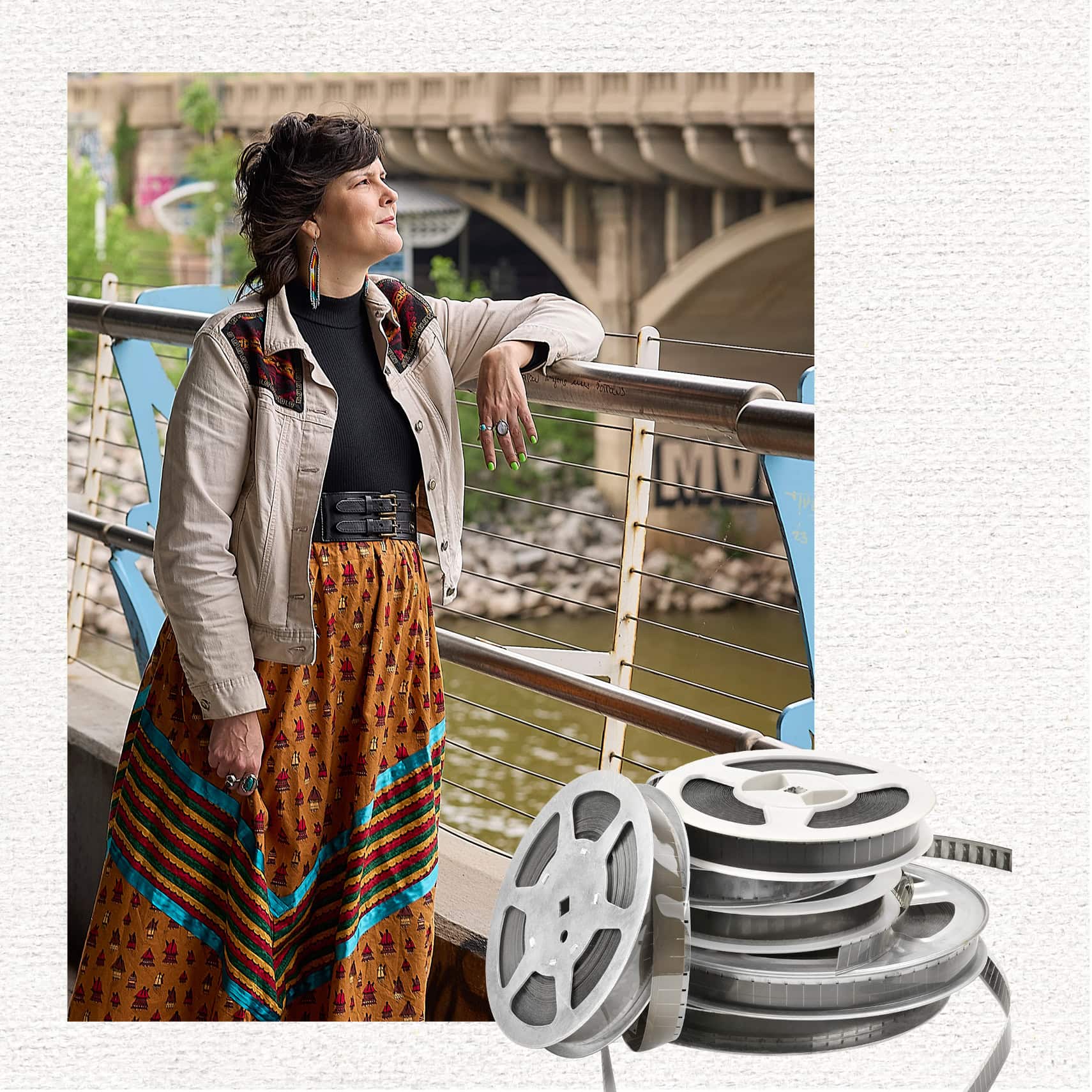

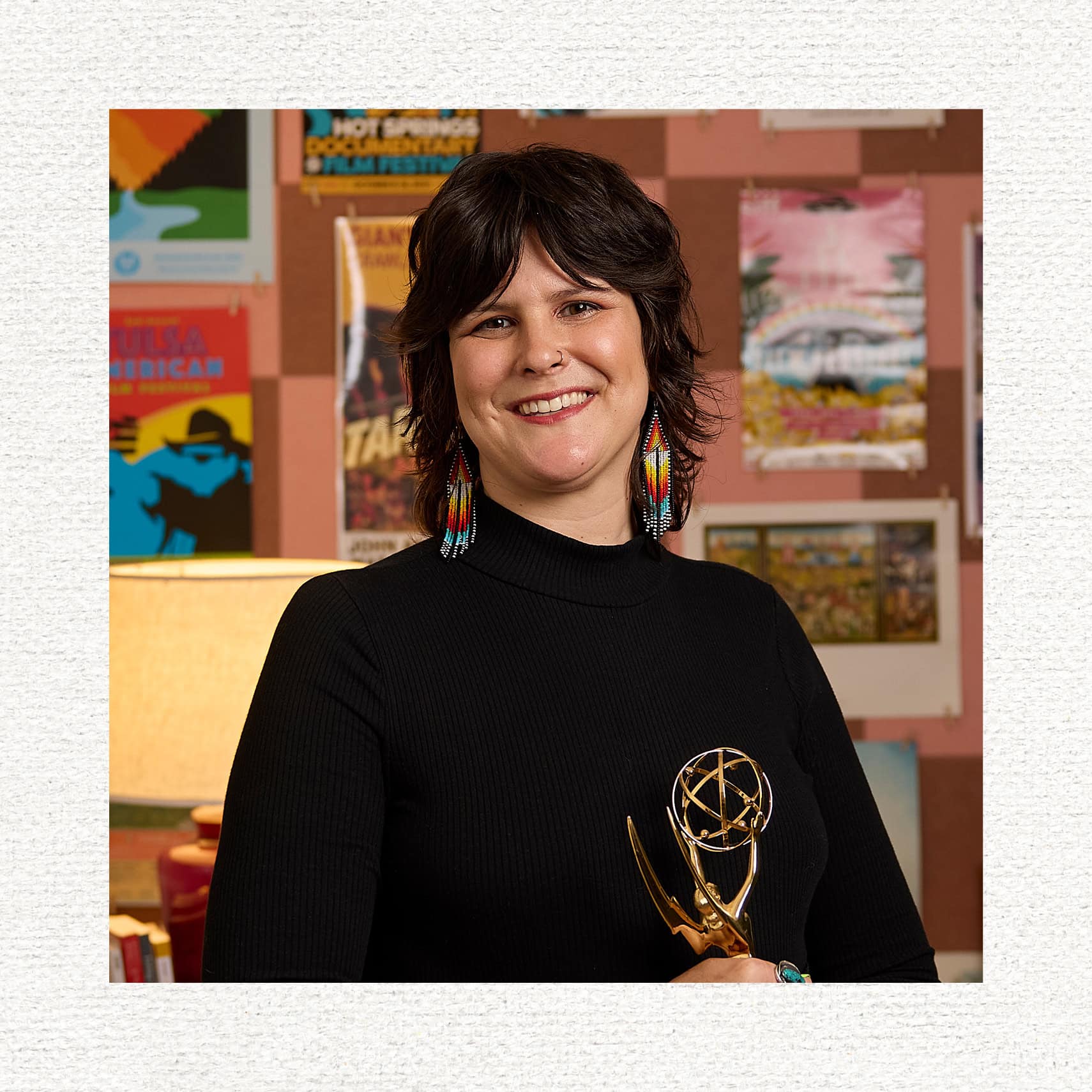
Her first feature documentary, Drowned Land, marked a turning point. Initially conceived as an environmental project, the film evolved into a personal exploration of family, land, and water. Drawing on her grandfather’s connection to Oklahoma’s rivers and dams, Thurston intertwined her own story with broader histories of displacement and resilience.
“I’ve always been aware of our history as displaced peoples and living in diaspora,” said Colleen. This awareness led her to get to know more about the people who are in danger of losing everything they have to the commodification of water. She saw a pattern of displacement for Choctaws and other Native people over time, from the Trail of Tears to other relocation efforts, where Native Americans were encouraged to move to California and other areas away from their homelands.

“I want people to know how beautiful our nation is, how beautiful the reservation is, and how special places like the river are.”
Drowned Land deepened her role not only as a filmmaker but also as an advocate for water rights and environmental stewardship. While she resists labels like “activist,” she acknowledges that telling stories of rivers, lakes, and communities naturally intersects with issues of sovereignty, treaty rights, and survival.
“It’s about protecting the water. But it’s also about how our history is still relevant to today and how our history continues to live. And there are traumas within that history as well,” said Colleen. “There’s great resiliency, but we can end those cycles, and we can end those traumas. We can make sure that doesn’t happen to our people anymore.”
“It’s about protecting the water. But it’s also about how our history is still relevant to today and how our history continues to live. And there are traumas within that history as well,” said Colleen. “There’s great resiliency, but we can end those cycles, and we can end those traumas. We can make sure that doesn’t happen to our people anymore.”
Thurston’s environmental filmmaking reflects her training in science and natural history media. She believes strongly in the power of moving images to educate, inspire, and effect change. For her, documentary film is more than storytelling—it is a tool for narrative change, one that can shift public understanding and spark real-world action. She points to moments like the Standing Rock protests of 2016, where media visibility helped demonstrate the urgency of Native struggles and contributed to a flourishing of Indigenous representation in film and television.
“Narrative change effects real change. As soon as people see themselves on screen, as soon as people see their stories represented, that has an effect off screen,” Colleen said.
As one of the first female tribal members to direct a feature documentary, Thurston feels both humbled and energized by the current renaissance in Native media. She sees her work as part of a continuum of Choctaw filmmakers, including her grandfather and others who laid the groundwork for today’s visibility. Whether documenting rivers, amplifying voices of water protectors, or exploring lighter subjects such as Indigenous puppetry, her guiding principle remains constant: to honor the Choctaw tradition of storytelling and ensure that Native experiences are seen and valued.
“We can get ahead of the story. We can also get ahead of the issue, so we can tell our own stories. We can control the narrative,” she said. “I want people to know how beautiful our nation is, how beautiful the reservation is, and how special places like the river are.”
For Thurston, success is measured in the gratitude of those whose stories she tells. Her greatest fulfillment comes from working collaboratively with communities, protecting what is sacred, and inspiring the next generation of storytellers. Through her films, she continues to illuminate the beauty of Choctaw culture, the urgency of protecting the land and waterways, and the enduring power of stories to shape identity and create change.